Germany and the Czech Republic, two countries in close proximity, with the longest neighboring border from the German perspective, but how well do we really know each other?
The Bremer Bündnis für deutsch-tschechische Zusammenarbeit e.V. (Bremen Alliance for German-Czech Cooperation) is committed to creating even more links between the countries, connecting people from the worlds of art, culture, society, education and science, or simply in their private lives. We are united by the joy of language – be it German, Czech or something completely different.
Since 2016, we have been developing creative formats and ideas to get to know each other even better and promote cooperation. Bremen has a vibrant Czech culture. We make it visible.
Our values: diversity, respect and peaceful coexistence. These are also our goals and that is why we are going out: to promote international contacts, democracy and commitment against racism, discrimination and extremism. Stereotypes? Not with us. Let’s talk to each other. Not about each other.
Are you in? Then take a look.
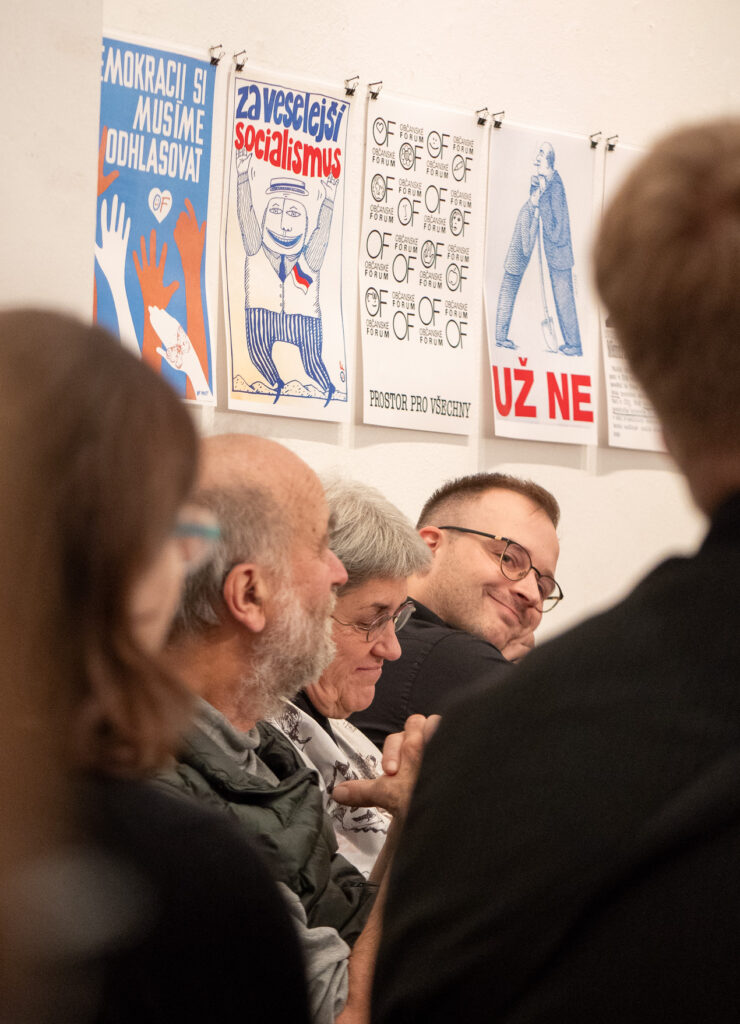
Would you like to know who is behind the alliance? Who makes plans, networks, develops ideas and plans diligently? We are a small team with different professional backgrounds and bring together our experiences, perspectives and points of view. Heart and soul for the cause? Sure, we have it. In fact, we have a lot.
Want to find out more? Here’s a look behind the scenes. Just click on the photo and find out more.
Our team
Our team consists of dedicated people with different professional backgrounds and experience. We contribute our individual skills and perspectives. Our projects: Organically grown diversity.
Tolerance, equality and a passion for social commitment. We work on the basis of respect - with each other, for each other and for the projects that are close to our hearts.
We have many years of experience in projects and campaigns against discrimination and for democracy. We implement the goals of the association professionally.
We maintain an open exchange and a positive working atmosphere within the team. New ideas and innovative approaches are discussed in a supportive environment and projects are successfully implemented.
For me, the Bremer Bündnis für deutsch-tschechische Zusammenarbeit e.V. means more than just understanding between two countries: Cohesion, discovering cultural diversity, strengthening community, being in exchange. More important than ever, especially in the current times!
Libuše Černá
The Bremer Bündnis für deutsch-tschechische Zusammenarbeit e.V. is supported by

















We look forward to any kind of participation and support. Be part of the projects, visit our events, support the association. And most importantly: pass it on!
© Bremer Bündnis e.V. | 2024-2026 | All rights reserved.
First Chairman
My name is Klaas Anders, I am a historian and I am currently the first chairman of the Bremen Alliance for German-Czech Cooperation.
Which project or initiative of the alliance is particularly close to your heart and why?
The project that brought me to the alliance and which also forms the core of the association is the “So macht man Frühling” festival, which is really close to my heart.
Imagine you could invite a famous Czech and a famous German personality to dinner. Who would go on this date?
I don’t know if that would be a dinner date, but having a beer with Petr Pavel would certainly be an experience that could be very enriching, especially for Olaf Scholz.
What is your favorite Czech food – and why?
I think the answer is Smažený sýr. When I lived in Prague for half a year during Corona, one of the few activities in my everyday life consisted of taking a long walk through Stromovka and then eating a smažený sýr “to go” at Lokál Nad Stromovkou and drinking a beer by the window.
What challenges do you see in German-Czech cooperation and how can the alliance help to overcome them?
In both Germany and the Czech Republic, parties that stand for isolationism and nationalism are celebrating election successes. I believe that in the coming years, it will be important to defend open borders and joint work, even in cases of doubt against the ruling politicians, and to examine how we can continue to work across borders even in the crises that will come.
If you had to describe the German-Czech Alliance Bremen in one sentence, what would it be?
As a representative of the Czech Embassy in Berlin recently put it: “We organize the largest German-Czech festival in northwest Germany. Probably the only one, but it’s still a nice sentence.
Second Chairman
My name is Daniel Schmidt, I am a literary scholar and part of the globale° festival for cross-border literature. I am also part of Kollit – the collective for young literature in Bremen. I am the second chairman of the board.
Which project or initiative of the alliance is particularly close to your heart and why?
Of course, our cultural festival “So macht man Frühling” is an important project that has been running for eight years and plays an important role in the dialog between German and Czech culture. But our exhibition “Eastward to the West” was also a success, as it was shown in several cities in the Czech Republic and Germany. I am also very pleased that the alliance is carrying out the Nazi injustice project “Degenerate Music” and investigating exciting results on the persecution of swing youth.
>Imagine you could invite a famous Czech and a famous German personality to dinner. Who would go on this date?
If dead people are allowed, I would invite Libuše Šafránková and Hannelore Elsner to dinner to talk about the changes in the art of acting and perhaps also how German and Czech actors were connected back then.
What is your favorite Czech food – and why?
I love Bohemian dumplings and like to eat them (even if they will soon no longer be available in this form) in the dining car on Czech trains.
What challenges do you see in German-Czech cooperation and how can the alliance help to overcome them?
I see the challenge in the fact that, away from the border region, Czech culture does not play such a big role in the German public, although German culture is very well received in the Czech Republic. In addition, the political focus, and therefore funding, is shifting to the Asian region, making cultural projects more difficult. It is therefore important that there is also a place in Bremen to strengthen German-Czech relations.
If you had to describe the German-Czech Alliance Bremen in one sentence, what would it be?
Czech culture in Bremen – that connects Moin and Ahoj.
Assessor
Which project or initiative of the alliance is particularly close to your heart and why?
Our festival “This is how you do spring”. We’ll be doing it for the ninth time next year, although it was originally intended as a one-off event. It is now the largest German-Czech festival in north-west Germany.
Imagine you could invite a famous Czech and a famous German personality to dinner. Who would go on this date?
The two presidents. I think they would have a lot to say.
What is your favorite Czech food – and why?
What challenges do you see in German-Czech cooperation and how can the alliance help to overcome them?
The borders may be invisible, but they are there. In Germany, especially in northern Germany, very little is known about current developments in the Czech Republic. Yet the Czech Republic is the country with which Germany has the longest neighboring border. Incidentally, even in the Czech Republic, people only really know Saxony, Bavaria and perhaps Berlin. We are doing what we can to change this.
If you had to describe the German-Czech Alliance Bremen in one sentence, what would it be?
We are a group of incorrigible romantics. And that’s a good thing.
Treasurer
Moin. I am Philipp Mangels, a historian, and have been the treasurer of the association since 2022. As an accountant’s son with a handy memory for numbers, I feel very comfortable in the role of financier in the background.
Which project or initiative of the alliance is particularly close to your heart and why?
As I am employed by the educational project “Nazi Injustice: ‘Degenerate Music'” run by the Bremer Bündnis, it is not difficult for me to decide. However, my choice of this project is not only due to the fact that I invest by far the most time in it. Rather, it is the themes of this project that appeal to me: Music, dance, youth and subculture. And in a historical context. Rarely has a project appealed so much to my research interests and my previous academic education.
Imagine you could invite a famous Czech and a famous German personality to dinner. Who would go on this date?
As a famous Czech personality, I would invite Jan Koller to dinner. It has a lot to do with nostalgia. He was my first favorite football player and one of the reasons why I never wanted to miss a Borussia Dortmund game as a child. I always wanted to be as tall as Jan Koller. Unfortunately, my growth process stopped at 1.79m.
But to make sure the dinner is not just about sport, I would also invite Farin Urlaub as a famous German personality. On the one hand, music is a very productive topic of conversation. On the other hand, with Farin Urlaub I see potential to move on to the cultural quarter after dinner. I would love to experience the dynamic of Koller and Urlaub both at dinner and in the pub.
What is your favorite Czech food – and why?
This is definitely Smažený sýr. When I lived in Prague for six months, I tried this baked cheese in many different restaurants. I found the best one in a quaint inn far outside the city center. Visiting this restaurant with smažený sýr and pivo felt very Czech, not least because neither English nor German was spoken.
What challenges do you see in German-Czech cooperation and how can the alliance help to overcome them?
Transnational associations, projects and initiatives are generally very common in the respective border regions. German-Czech cooperation is no different, and because the Czech Republic is also a small country compared to France or Poland, this situation is even more pronounced in Germany. One challenge then is to bring German, Czech or German-Czech culture not only to the immediate neighborhood in the border regions, but also to more distant areas. And this is precisely where the Bremen Alliance comes in, thanks to its location in north-western Germany.
If you had to describe the German-Czech Alliance Bremen in one sentence, what would it be?
The Bremen Alliance for German-Czech Cooperation is a young and committed association that values the diversity of Czech culture and wants to bring it to life in northwest Germany.
Secretary
My name is Janika Rehak, I’m an author, copywriter, mom, avid reader and my great passions are classic fantasy and horror. For me, almost everything has “something to do with writing” and the Alliance is no different: I’m secretary and always busy writing at meetings.
Which project or initiative of the alliance is particularly close to your heart and why?
I find all events that focus primarily on connection, exchange and remembrance culture extremely important. My personal favorite, however, is the annual festival “So macht man Frühling”: culture, art, music, literature, political and historical events. I like the low-threshold way in which people can engage in exchange and the fact that the alliance often brings in films from the Czech Republic, for example, that would otherwise not be shown in German cinemas – not to mention the fact that you can talk to the makers and participants afterwards. In fact, I often – sometimes unconsciously – scan my everyday life and experience for topics and projects that I think could fit in with “spring” and I think it’s great when it can actually be realized. I look forward to it every year, it marks a fixed period in my calendar, it becomes “spring” twice over, so to speak.
Imagine you could invite a famous Czech and a famous German personality to dinner. Who would go on this date?
Did someone say that these people should still be alive? No, right? Then I would definitely invite Václav Havel to the table from the Czech side. I find his life impressive, including his role in the early reform movements and later in the Velvet Revolution. I would like to ask him hundreds, heck, thousands of questions about how he experienced this period. What impresses me above all is that, despite setbacks, being banned from his profession, imprisoned, etc., he always maintained the idea of reconciliation, which can also be found in his essays.
I would ask Juli Zeh to do this. I think she’s great at tracking down “fractures” in her stories and settings and also tracing them, in pretty much every subject area that can be found. But I have the feeling that she doesn’t construct, she simply describes what is, puts her finger in the wound and spares neither readers nor characters. She also has strong political opinions. I would be interested to hear what these two have to say to each other, what opinions they hold and how they see the world today. Whether there are similarities or areas of tension. I would simply hold back, sip my tea and listen intently.
What is your favorite Czech food – and why?
My favorite food is actually “Topinky” – that’s toasted grey bread, salted and rubbed with garlic. It’s actually something very simple and a good way to use up leftovers if you have too much bread in the house – but when we had it at home, it was always a real celebration. My parents prepared it in great detail, sometimes days in advance. People were invited, there were salads and snacks, especially pickles, sour and spicy things and then a midnight soup, usually a clear broth with semolina dumplings. I liked to nibble on the semolina, and if I got caught there was a lot of trouble. For the adults, Czech beer and Becherovka were traditionally served. Unfortunately, this tradition died out after my father passed away. But now I just do it myself: Inviting friends over for a Topinky evening. For me, it’s not just a meal, it’s also a get-together, fellowship, talking, enjoyment, a party.
However, I would advise you not to plan a first date or job interview the day after – the garlic thing is pretty intense.
What challenges do you see in German-Czech cooperation and how can the alliance help to overcome them?
What I keep noticing – subjectively, mind you – is that many people in Germany, especially in the north and west, hardly seem to have the Czech Republic on their radar. Sure, many have been to Prague and visited the tourist hotspots, but that’s where it ends. There is only limited genuine interest in the country – and I think that’s a shame, as we are direct neighbors. As I said, I experience this mainly in the north, in the border regions the exchange is much more lively and I think that’s great and that’s exactly what I would like to see for us – in Bremen and the surrounding area, actually everywhere. I also hope that Czech art projects, films and literature will become better known and more important in Germany. This is where the alliance comes in, to further promote this exchange, beyond superficiality and clichés. I see this as a challenge, but also as a great gift, and I am grateful to be part of it.
If you had to describe the German-Czech Alliance Bremen in one sentence, what would it be?
The alliance is a committed association in the north that builds bridges and connects people.
First Chairman
My name is Klaas Anders, I am a historian and I am currently the first chairman of the Bremen Alliance for German-Czech Cooperation.
Which project or initiative of the alliance is particularly close to your heart and why?
The project that brought me to the alliance and which also forms the core of the association is the “So macht man Frühling” festival, which is really close to my heart.
Imagine you could invite a famous Czech and a famous German personality to dinner. Who would go on this date?
I don’t know if that would be a dinner date, but having a beer with Petr Pavel would certainly be an experience that could be very enriching, especially for Olaf Scholz.
What is your favorite Czech food – and why?
I think the answer is Smažený sýr. When I lived in Prague for half a year during Corona, one of the few activities in my everyday life consisted of taking a long walk through Stromovka and then eating a smažený sýr “to go” at Lokál Nad Stromovkou and drinking a beer by the window.
What challenges do you see in German-Czech cooperation and how can the alliance help to overcome them?
In both Germany and the Czech Republic, parties that stand for isolationism and nationalism are celebrating election successes. I believe that in the coming years, it will be important to defend open borders and joint work, even in cases of doubt against the ruling politicians, and to examine how we can continue to work across borders even in the crises that will come.
If you had to describe the German-Czech Alliance Bremen in one sentence, what would it be?
As a representative of the Czech Embassy in Berlin recently put it: “We organize the largest German-Czech festival in northwest Germany. Probably the only one, but it’s still a nice sentence.
Second Chairman
My name is Daniel Schmidt, I am a literary scholar and part of the globale° festival for cross-border literature. I am also part of Kollit – the collective for young literature in Bremen. I am the second chairman of the board.
Which project or initiative of the alliance is particularly close to your heart and why?
Of course, our cultural festival “So macht man Frühling” is an important project that has been running for eight years and plays an important role in the dialog between German and Czech culture. But our exhibition “Eastward to the West” was also a success, as it was shown in several cities in the Czech Republic and Germany. I am also very pleased that the alliance is carrying out the Nazi injustice project “Degenerate Music” and investigating exciting results on the persecution of swing youth.
>Imagine you could invite a famous Czech and a famous German personality to dinner. Who would go on this date?
If dead people are allowed, I would invite Libuše Šafránková and Hannelore Elsner to dinner to talk about the changes in the art of acting and perhaps also how German and Czech actors were connected back then.
What is your favorite Czech food – and why?
I love Bohemian dumplings and like to eat them (even if they will soon no longer be available in this form) in the dining car on Czech trains.
What challenges do you see in German-Czech cooperation and how can the alliance help to overcome them?
I see the challenge in the fact that, away from the border region, Czech culture does not play such a big role in the German public, although German culture is very well received in the Czech Republic. In addition, the political focus, and therefore funding, is shifting to the Asian region, making cultural projects more difficult. It is therefore important that there is also a place in Bremen to strengthen German-Czech relations.
If you had to describe the German-Czech Alliance Bremen in one sentence, what would it be?
Czech culture in Bremen – that connects Moin and Ahoj.
Assessor
Which project or initiative of the alliance is particularly close to your heart and why?
Our festival “This is how you do spring”. We’ll be doing it for the ninth time next year, although it was originally intended as a one-off event. It is now the largest German-Czech festival in north-west Germany.
Imagine you could invite a famous Czech and a famous German personality to dinner. Who would go on this date?
The two presidents. I think they would have a lot to say.
What is your favorite Czech food – and why?
What challenges do you see in German-Czech cooperation and how can the alliance help to overcome them?
The borders may be invisible, but they are there. In Germany, especially in northern Germany, very little is known about current developments in the Czech Republic. Yet the Czech Republic is the country with which Germany has the longest neighboring border. Incidentally, even in the Czech Republic, people only really know Saxony, Bavaria and perhaps Berlin. We are doing what we can to change this.
If you had to describe the German-Czech Alliance Bremen in one sentence, what would it be?
We are a group of incorrigible romantics. And that’s a good thing.
Treasurer
Moin. I am Philipp Mangels, a historian, and have been the treasurer of the association since 2022. As an accountant’s son with a handy memory for numbers, I feel very comfortable in the role of financier in the background.
Which project or initiative of the alliance is particularly close to your heart and why?
As I am employed by the educational project “Nazi Injustice: ‘Degenerate Music'” run by the Bremer Bündnis, it is not difficult for me to decide. However, my choice of this project is not only due to the fact that I invest by far the most time in it. Rather, it is the themes of this project that appeal to me: Music, dance, youth and subculture. And in a historical context. Rarely has a project appealed so much to my research interests and my previous academic education.
Imagine you could invite a famous Czech and a famous German personality to dinner. Who would go on this date?
As a famous Czech personality, I would invite Jan Koller to dinner. It has a lot to do with nostalgia. He was my first favorite football player and one of the reasons why I never wanted to miss a Borussia Dortmund game as a child. I always wanted to be as tall as Jan Koller. Unfortunately, my growth process stopped at 1.79m.
But to make sure the dinner is not just about sport, I would also invite Farin Urlaub as a famous German personality. On the one hand, music is a very productive topic of conversation. On the other hand, with Farin Urlaub I see potential to move on to the cultural quarter after dinner. I would love to experience the dynamic of Koller and Urlaub both at dinner and in the pub.
What is your favorite Czech food – and why?
This is definitely Smažený sýr. When I lived in Prague for six months, I tried this baked cheese in many different restaurants. I found the best one in a quaint inn far outside the city center. Visiting this restaurant with smažený sýr and pivo felt very Czech, not least because neither English nor German was spoken.
What challenges do you see in German-Czech cooperation and how can the alliance help to overcome them?
Transnational associations, projects and initiatives are generally very common in the respective border regions. German-Czech cooperation is no different, and because the Czech Republic is also a small country compared to France or Poland, this situation is even more pronounced in Germany. One challenge then is to bring German, Czech or German-Czech culture not only to the immediate neighborhood in the border regions, but also to more distant areas. And this is precisely where the Bremen Alliance comes in, thanks to its location in north-western Germany.
If you had to describe the German-Czech Alliance Bremen in one sentence, what would it be?
The Bremen Alliance for German-Czech Cooperation is a young and committed association that values the diversity of Czech culture and wants to bring it to life in northwest Germany.
Secretary
My name is Janika Rehak, I’m an author, copywriter, mom, avid reader and my great passions are classic fantasy and horror. For me, almost everything has “something to do with writing” and the Alliance is no different: I’m secretary and always busy writing at meetings.
Which project or initiative of the alliance is particularly close to your heart and why?
I find all events that focus primarily on connection, exchange and remembrance culture extremely important. My personal favorite, however, is the annual festival “So macht man Frühling”: culture, art, music, literature, political and historical events. I like the low-threshold way in which people can engage in exchange and the fact that the alliance often brings in films from the Czech Republic, for example, that would otherwise not be shown in German cinemas – not to mention the fact that you can talk to the makers and participants afterwards. In fact, I often – sometimes unconsciously – scan my everyday life and experience for topics and projects that I think could fit in with “spring” and I think it’s great when it can actually be realized. I look forward to it every year, it marks a fixed period in my calendar, it becomes “spring” twice over, so to speak.
Imagine you could invite a famous Czech and a famous German personality to dinner. Who would go on this date?
Did someone say that these people should still be alive? No, right? Then I would definitely invite Václav Havel to the table from the Czech side. I find his life impressive, including his role in the early reform movements and later in the Velvet Revolution. I would like to ask him hundreds, heck, thousands of questions about how he experienced this period. What impresses me above all is that, despite setbacks, being banned from his profession, imprisoned, etc., he always maintained the idea of reconciliation, which can also be found in his essays.
I would ask Juli Zeh to do this. I think she’s great at tracking down “fractures” in her stories and settings and also tracing them, in pretty much every subject area that can be found. But I have the feeling that she doesn’t construct, she simply describes what is, puts her finger in the wound and spares neither readers nor characters. She also has strong political opinions. I would be interested to hear what these two have to say to each other, what opinions they hold and how they see the world today. Whether there are similarities or areas of tension. I would simply hold back, sip my tea and listen intently.
What is your favorite Czech food – and why?
My favorite food is actually “Topinky” – that’s toasted grey bread, salted and rubbed with garlic. It’s actually something very simple and a good way to use up leftovers if you have too much bread in the house – but when we had it at home, it was always a real celebration. My parents prepared it in great detail, sometimes days in advance. People were invited, there were salads and snacks, especially pickles, sour and spicy things and then a midnight soup, usually a clear broth with semolina dumplings. I liked to nibble on the semolina, and if I got caught there was a lot of trouble. For the adults, Czech beer and Becherovka were traditionally served. Unfortunately, this tradition died out after my father passed away. But now I just do it myself: Inviting friends over for a Topinky evening. For me, it’s not just a meal, it’s also a get-together, fellowship, talking, enjoyment, a party.
However, I would advise you not to plan a first date or job interview the day after – the garlic thing is pretty intense.
What challenges do you see in German-Czech cooperation and how can the alliance help to overcome them?
What I keep noticing – subjectively, mind you – is that many people in Germany, especially in the north and west, hardly seem to have the Czech Republic on their radar. Sure, many have been to Prague and visited the tourist hotspots, but that’s where it ends. There is only limited genuine interest in the country – and I think that’s a shame, as we are direct neighbors. As I said, I experience this mainly in the north, in the border regions the exchange is much more lively and I think that’s great and that’s exactly what I would like to see for us – in Bremen and the surrounding area, actually everywhere. I also hope that Czech art projects, films and literature will become better known and more important in Germany. This is where the alliance comes in, to further promote this exchange, beyond superficiality and clichés. I see this as a challenge, but also as a great gift, and I am grateful to be part of it.
If you had to describe the German-Czech Alliance Bremen in one sentence, what would it be?
The alliance is a committed association in the north that builds bridges and connects people.